Showing posts with label Favourite X-Files. Show all posts

Saturday, 8 October 2016

FAVOURITE X-FILES: Pusher - a Warrior without a Master

In a new series of features regarding the favourite episodes of our blog writers, Tony Black discusses his one true X-File love, 'Pusher'...

--

“You mean you killed this man for nothing, you sick bastard?”

“Oh haven’t you figured it out yet, Mulder? They all kill themselves.”
pusher

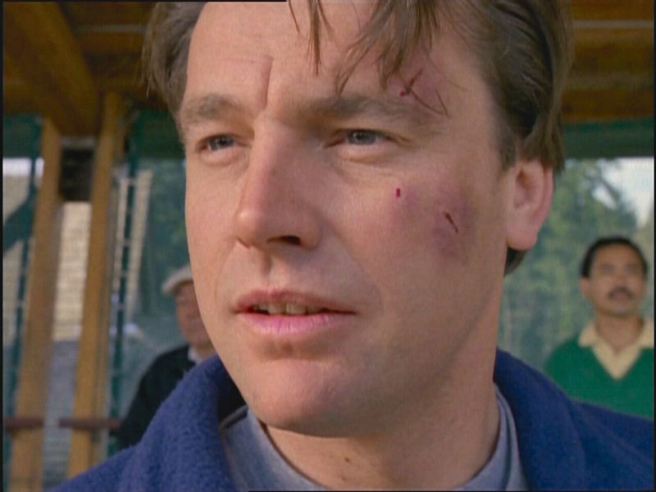
One of the chief inspirations for FBI Special Agent Fox Mulder, erstwhile and dogged investigator of The X-Files, was the master of detection, Sherlock Holmes. Chris Carter himself has cited Arthur Conan Doyle’s legendary literary figure as a touchstone for Mulder, with his remarkable leaps of logic to explain the unexplained, not to mention his eccentricities and detachment from traditional life & relationships – plus he has a ready made Dr. Watson in fellow Special Agent Dana Scully, yanked out of her normal existence, swiftly enraptured by Mulder’s world. Up until ‘Pusher’, the seventeenth episode of The X-Files‘ third season–as the show was really hitting the mid-90’s zeitgeist–Mulder had never found his Professor Moriarty, his nemesis. He arrived ready-made in Robert Patrick Modell, the eponymous ‘pusher’, and the result saw Vince Gilligan deliver the finest X-File in the show’s (to-date) ten season run.

The genius of ‘Pusher’ is that it’s one of those concepts, even for an X-File, that is breathtakingly simple yet beautiful in construction; a man capable of talking another human being into doing whatever he desires, a form of mind control inducement thanks to the cadence of the person’s voice. Giving that power to a twisted, bitter sociopath who wants nothing more than a worthy adversary is a stroke of brilliance, and that’s the central key to ‘Pusher’ being such a perfectly constructed hour of television.

The X-Files by its very nature, much like Doctor Who, has the freedom to go almost anywhere and tell a myriad of stories, such is the vast canvas of the paranormal & unknown in our world; when it isn't about global alien conspiracies, man-eating monsters or natural pathogens or predators, often the more intriguing character-based concepts come into play – the reality bending seduction of ‘Milagro’, the unnerving fetishism of ‘Irresistable’ or cold hearted pain of ‘Paper Hearts’. With ‘Pusher’ it was a battle of wills, a chess match between two adversaries, as Mulder desperately begins to realise that Modell simply wants to watch the world around him burn, look into the face of the man good enough to beat him, and smile. Though he wants to be Moriarty, in truth he’s more like the Joker. Scully describes him at one point as “a little man who wants everyone to believe he’s big” and that’s the tragic, sometimes jet black comic ideal driving ‘Pusher’ as an episode.

“Modell psyched the guy out, he put the whammy on him!”

“Please explain to me the scientific nature of ‘the whammy’.”
protectedimage-php

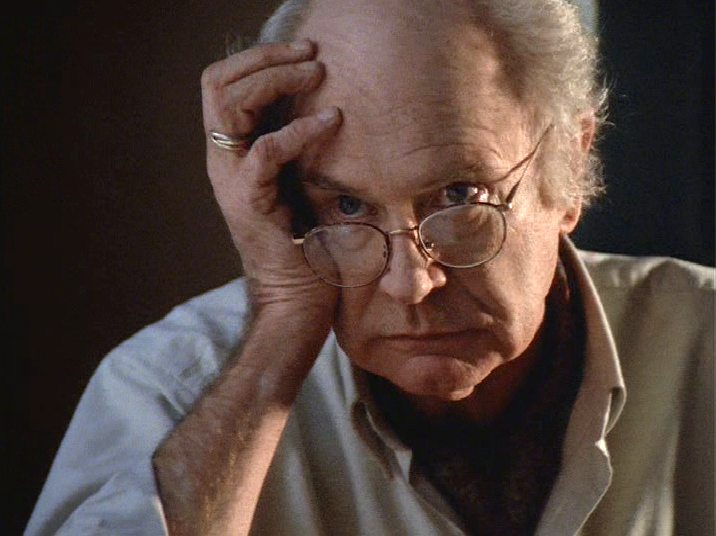
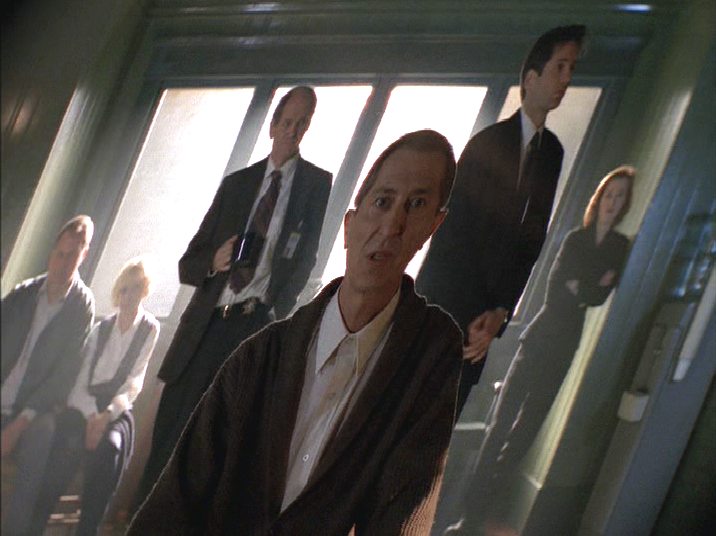
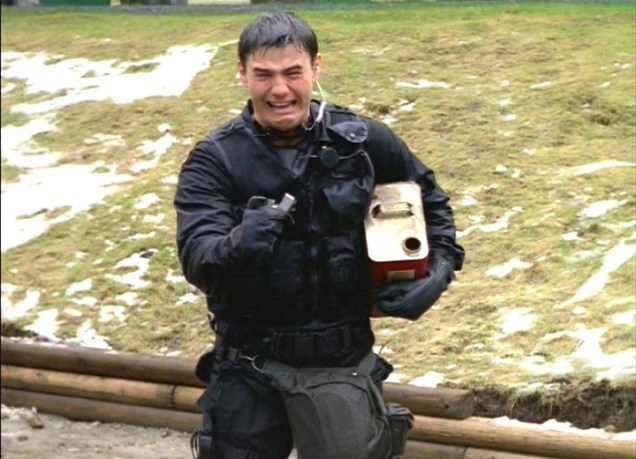
Enormous credit must go to guest star Robert Wisden as Modell, because it’s his performance that truly sells Gilligan’s marvelous writing; he’s sly, calculating, quippy and strangely charming, a hugely tricky balance to pull off, but Wisden is able to flip between these styles at will. At one moment Modell may be calmly talking a court judge out of sentencing him, almost the friendly neighbour next door, then the next he’s inducing a cop to immolate himself, taunting Mulder jokily over the phone or, in arguably the second most memorable scene of the episode, talking bullish local detective Frank Burst into having a heart attack over the phone. It’s truly chilling and the moment of complete shock and horror on the faces of Mulder, Scully and the team of detectives around Frank at that point still sends a chill down the spine – topped off when Modell then calmly gives them the pay phone number Frank was keeping him on the line to trace.

Wisden manages to craft the finest ‘human’ monster the show ever created – especially given that tinge of tragedy to the man; he’d spent his life being average, amounting to little, and only upon discovering his ‘power’ was he able to make any kind of mark, styling himself after the Japanese Ronin, a ‘warrior without a master’. Gilligan manages to tap into this psychology while always keeping Modell alien enough to be frequently terrifying.

In many of the stand alone episodes of The X-Files, you got the feeling it was just another case for either Mulder & Scully, sometimes having a deeper impact on the guest stars than they themselves. For Mulder in particular, ‘Pusher’ you know stays with him. That’s borne out indeed two seasons later in sequel episode ‘Kitsunegari’ which while vastly inferior, actually serving to hugely neuter Modell’s power, does show how much Mulder felt strongly Modell should die for his crimes in ‘Pusher’. Often he can saunter through a case facing a few scrapes but coming out the other end proven right and unscathed bar some cuts & bruises, but both times he encounters Modell he’s marked; you can feel the moments in ‘Pusher’ where Mulder is being pushed, being drained, such as his vociferous prosecution and frustration at the judge after he catches Modell, and later his aforementioned fury at Frank Burst’s chilling murder (and his desperate attempts to save him when he realises what Modell is doing).

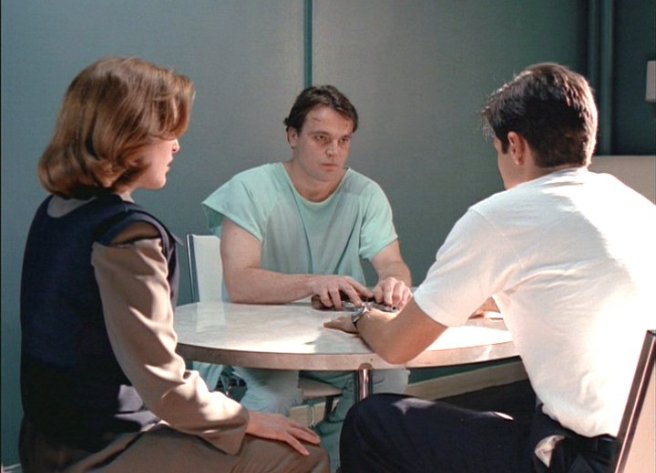
It all culminates in, appropriately, the show’s final act, an absolute master stroke in narrative tension from Gilligan and particularly director Rob Bowman, which sees a ‘pushed’ Mulder led by the dying Modell into a final battle of ‘Russian roulette’ in an evacuated hospital, with an emotional & shaken Scully acting as arbiter at the table. David Duchovny & Gillian Anderson give it their all, you can feel the power, tension and emotion at that table as Modell strives to win his final victory.

“It was like you said. He was always such a little man. This was finally something that made him feel big.”

“I say we don’t let him take up another minute of our time.”
pusher_with_duo

The reason that ‘Pusher’ might be the greatest X-File ever made isn’t just because of Vince Gilligan’s supreme script, or Rob Bowman’s expert direction, or indeed the magnificent guest performance of Robert Wisden, but rather because for a show built around the unknown, about the monsters within and without, Robert Patrick Modell was never truly a monster at all. He committed horrific crimes. He was deeply twisted and hateful. But he was also a sad, lonely, desperate figure whose only way of making a stamp on the world was by controlling the whims of others and, perversely, trying to grab the attention of the man he no doubt wished he could have been. That wonderful sense of twisted humanity is what drama, what great storytelling, is all about.

As for this reviewer, as Modell’s victims might say, he had to go.

--

This article first appeared on Failed Critics in July 2015. You can follow Tony on Twitter @Mr_AJ_Black.

Wednesday, 13 July 2016

FAVOURITE X-FILES: Triangle (aka Mulder v Nazis)


Baz Greenland discusses his favourite X-File, season six's Triangle…

the-x-files-triangle

Choosing a favorite episode of The X-Files is a very difficult process. Do I go with a classic monster story like Tooms' introduction in 'Squeeze'? My favorite mythology story, season three's 'Nisei' / '731'?  The ridiculously funny 'Clyde Bruckman's Final Repose'? I wholeheartedly agree with Carl Sweeney that 'Home' is a dark and legendary masterpiece. But I think what makes all those episodes so special are the boundaries they pushed in storytelling. The great episodes of The X-Files are the ones that played with the classic TV formula and none did it better than season six's 'Triangle'.

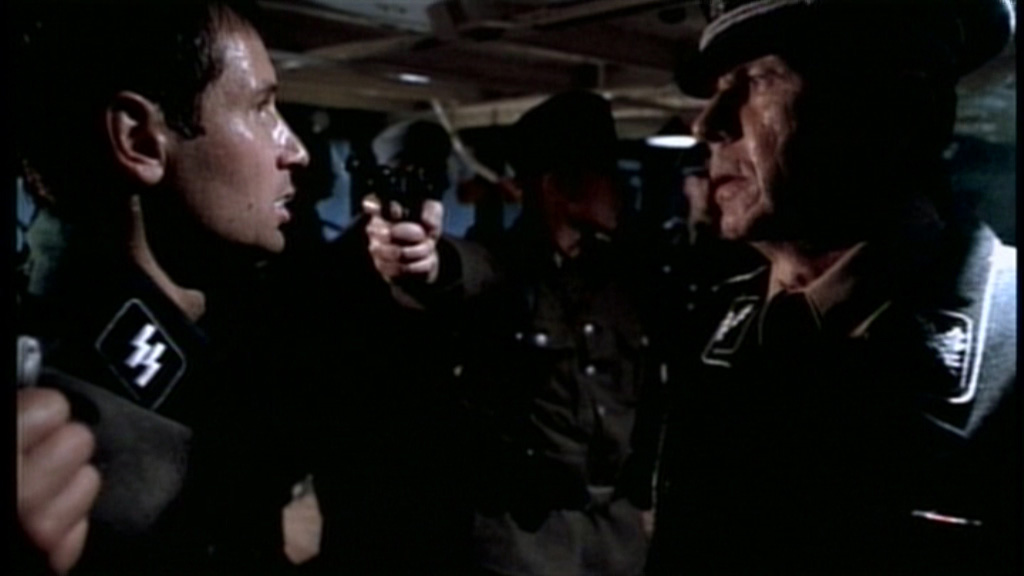
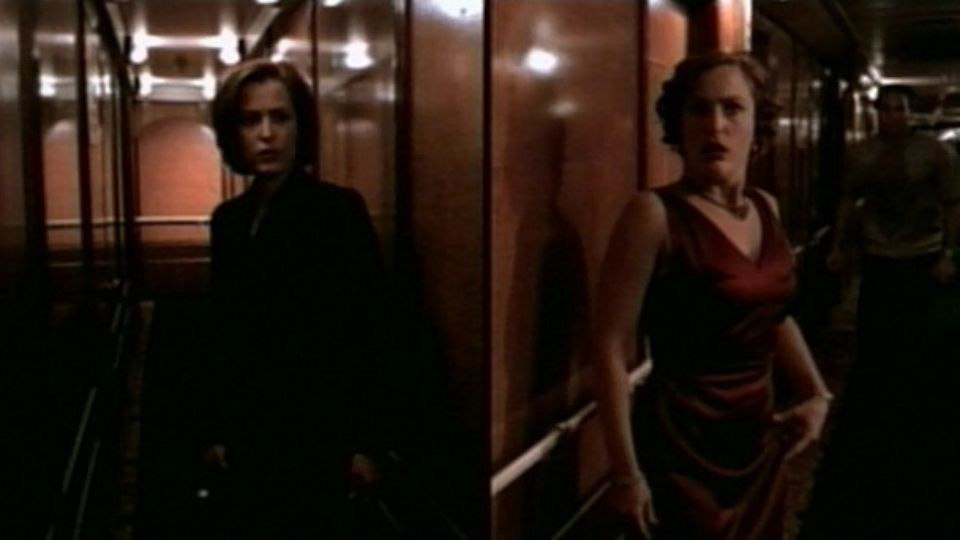
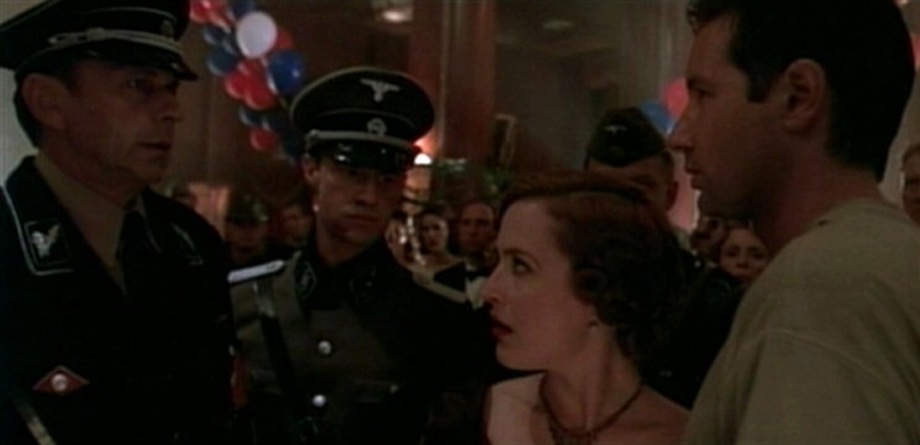
It is one of the most fun episodes in the show's history, as Mulder sneaks aboard the Queen Anne, a cruise ship that disappeared in 1939 and has now reappeared in the Bermuda Triangle in the present. Rather than find himself wandering the abandoned decks of the ship he finds himself back in 1939, surrounded by Nazis hellbent on capturing a U.S. scientist... and many of them wear familiar faces. There is no explanation as to why one of the passengers looks like Scully, while the Nazi officers wear the faces of the Cigarette Smoking Man, Jeffrey Spender and Walter Skinner or why the crewman in charge of the engine room looks like Assistant Director Alvin Kersh. But the bizarre nature of the episode is unashamedly wrapped up in a big bow that is the weirdness of the Bermuda Triangle and 'Triangle' fully embraces every minute of it.

the-x-files-triangle-3

It's a beautiful episode too; apparently, there are only twenty-four individual shots in the whole episode and the sweeping grandeur of the ship - it's ornate corridors, magnificent ballroom, steamy engine room - is captured perfectly as the camera follows the confused Mulder as he evades German soldiers and is captured. David Duchovny is clearly having a lot of fun, his bewilderment at finding the alternate Scully or seeing the nazis wearing the faces of his enemies perfectly delivered. There's even a great story arc for alternate Skinner, who gradually fights against his superiors as he did against the Cigarette Smoking Man in seasons two and three.

The second act is one of the best scenes in the show's history, one long tracking shot that starts with Scully visited by the Lone Gunmen in the FBI offices and then racing through the corridors of the J Edgar Hoover Building in search of the answers she needs; the co-ordinates to where Mulder was last seen.

At this point in the show's history (Mulder and Scully are thrown off the X-Files), she is completely ostracized from everyone and that desperation shows as she demands information from Spender. It quickly backfires as he goes to Kersh and the Cigarette Smoking Man and her race through the levels of the building are magnificently tense. It is capped by a brilliant moment when she kisses Skinner as he finds her the co-ordinates and escapes through the parking lot with the Lone Gunmen, Spender in pursuit. The fact that it is all done in one shot shows the massive amount of work that must have been done to transition each level of the building and shows that when Chris Carter was good (he writes and directs the episode) he was really good!

the-x-files-triangle-2

It all culminates in a thrilling final act filled with split screens and Mark Snow's brilliant playful score as Scully and the Lone Gunmen search the ship in the present while Mulder and alternate Scully battles Nazis as a full rebellion takes place in the past. That shot of both Scully's moving towards the same point on-screen and then crossing paths is a masterpiece in editing. And it is capped off by the fabulous kiss before Mulder jumps off the ship and travels back into the present...

...yes that last part doesn't make a lot of sense but I don't think it needs too. 'Triangle' is a bonkers episode, visually stunning, filled with action, humour and the cast having a whole load of fun getting to place different versions of themselves. It even has that final moment where a hospitalized Mulder tells Scully he loves her and she scoffs in disgust. That must have had shippers everywhere squealing with delight, though they wouldn't have their first proper kiss until next season's 'Millennium'.

How can I describe 'Triangle' in  a few words? A bonkers masterpiece. It elicits a grin of joy every time I watch it. For me, it's The X Files at its very best...

You can follow Baz at @BazgGreenland on Twitter or follow his Facebook page www.facebook.com/BazGreenlandWriter

Baz is currently working his way through The X Files, revisited classic episodes and reviewing them at http://www.Thedigitalfix.com

Wednesday, 22 June 2016

FAVOURITE X-FILES: Why Jose Chung sends me into Outer Space


In a series of features regarding the favorite episodes of our blog writers, Paige Schector discusses why "Jose Chung's From Outer Space" will forever stand atop her list...

book

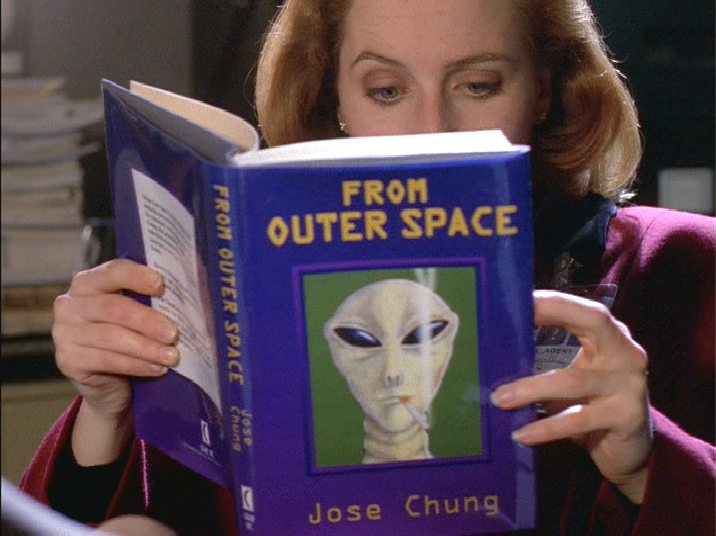
It's obvious from the get-go that "Jose Chung 'From Outer Space'" is not your garden variety X-Files episode. But in a way, it's what the series has been building up to for three seasons. There's the basic premise -- aliens -- and then there's the kaleidoscope through which Darin Morgan -- and then others after him, including show creator/executive producer Chris Carter -- sees that premise.

The teaser sets up the plot in which two teenagers' alien "experience," as Jose Chung (Charles Nelson Reilly) prefers to call it, is witnessed by a third party. And then an alien fourth party shows up on the scene. The apparently eccentric writer of some repute has been documenting the stories of everyone involved -- except for Mulder, skeptical yet again in a Morgan-penned script -- for Chung's upcoming non-fiction science-fiction novel. But Scully's willing to talk with him; she's an ardent admirer of his work.
jose

"Truth is as subjective as reality." -- Jose Chung
"Still, as a storyteller, I'm fascinated how a person's sense of consciousness can be so transformed by nothing more magical than listening to words. Mere words." -- Jose Chung

Scully backs this up when she details statements made be various participants. On the face of it, the testimonies seem contradictory by nature, but when pieced them together, they kind of form a coherent picture. Just like in the real world, everyone's viewpoints and recollections might just be due to the fact they're human beings remembering things the way they want them to have happened. But maybe there's a greater conspiracy wiping their memories. Perhaps both.

There's a lot of common ground in the tales told throughout the episode. Chung explains that many abductees often start their tales with "I know how crazy this all sounds, but..." and then at least two of his witnesses go on to use those exact words. "How the hell should I know" is uttered constantly by those without answers to what seem to be simple questions. Many threats end in "because if you do, you're a dead man."

room

So it falls on director Rob Bowman to make the repeated scenarios hang together and not upend the overall story. I think he does a masterful job, particularly with characters in similar scenes. For example, when Chrissy (Sarah Sawatsky) gets questioned at different points by Mulder, a psychiatrist and possibly officials stealing her memories, the actors' blocking mimics that of the other scenes. Which is truth and which is fiction? On some level, it might be up to the viewer to decide.

We seem to be getting Darin Morgan's takes on some universal truths, though. Scully handles some of them -- she doesn't believe in hypnosis because people in that state are prone to confabulation and stresses of any kind can cause the physical symptoms displayed by the victim. She finds that abduction lore has become so prevalent that someone asked to imagine an experience would come up with an identical scenario. Meanwhile, Lt. Jack Schaefer (Daniel Quinn) reveals nerve gas and some low-frequency beams can be used to create the illusion of lost time. So much for Mulder's pilot nine-minute theory.

pie

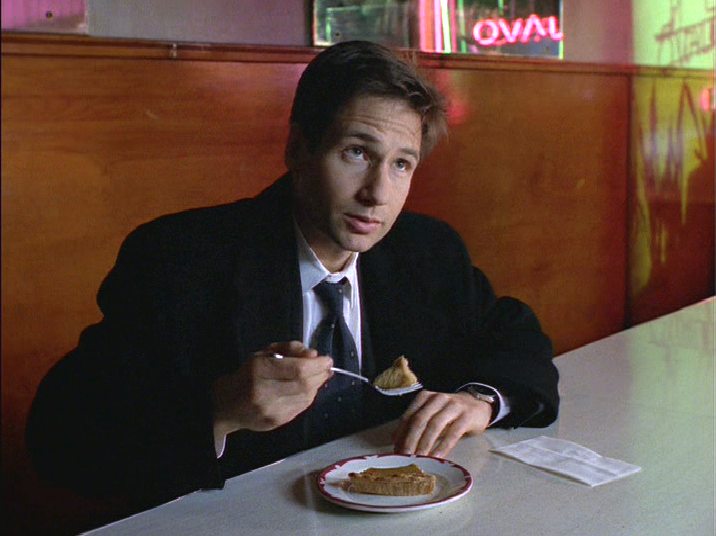
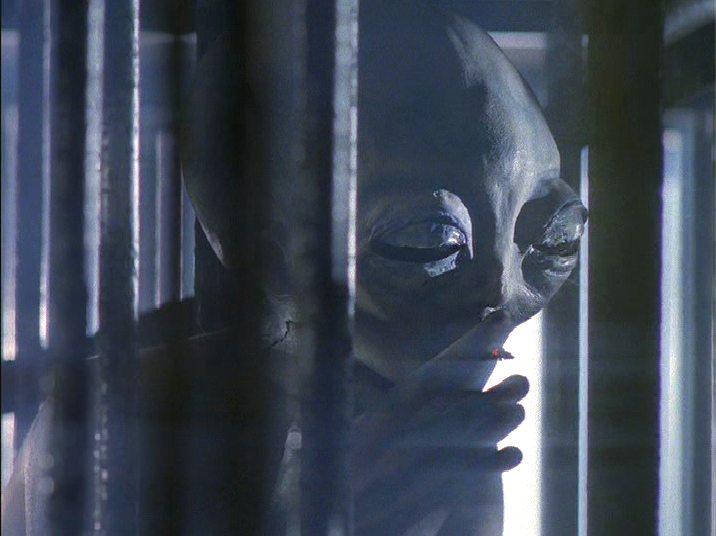
While we're in the midst of trying to decipher the puzzle, Morgan throws in a vast array of amusements. In one recollection of the events, Mulder ignites a fan frenzy with one single yelp. In another, he consumes an awful lot of sweet potato pie. The Stupendous Yappi (Jaap Broeker), straight out of Morgan's Emmy-winning "Clyde Bruckman's Final Repose" episode, provides narration for the alien autopsy footage in a thinly veiled spoof of a show actually produced by the Fox network.

There's a Man in Black who may be game-show host Alex Trebek or just amazingly resemble him. The other Man in Black looks like Jesse Ventura while pontificating and delivering back-breakers just like the wrestler used to. And best of all (for me), Lt. Schaefer uses a fork to create Devils Tower out of mashed potatoes while telling his story to Mulder -- an ode to Richard Dreyfuss' haunted character in Close Encounters of the Third Kind.

From the Detective Manners' "colorful phraseology" collection:
"You really bleeped up this case."
"I just got a call from some crazy bleephead claiming he was an eyewitness to this alien abduction. You feel like talking to this blankhole."
"Hey, I just got a call from some crazy blankety-blank claiming he found a real live dead alien body."
"Yeah, that's a bleepin' dead alien body if I ever bleeping saw one."

manners

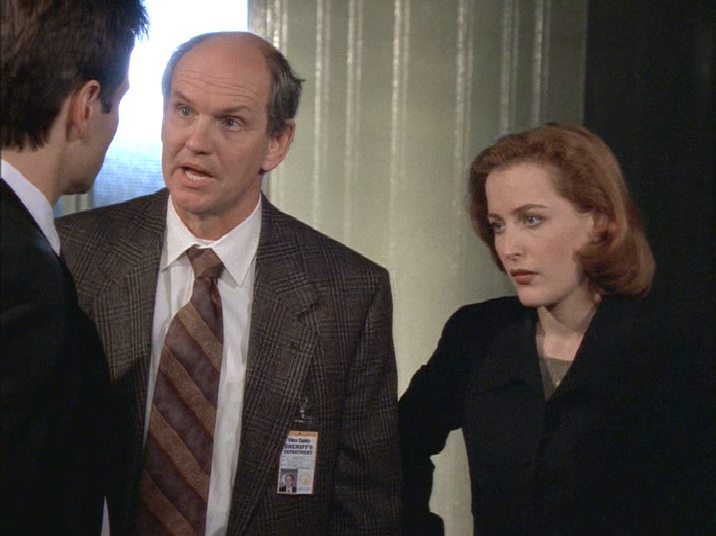
X-Files director Kim Manners originally was going to play the constantly irritated detective obviously named and crafted in his honor, but his work schedule precluded him from doing it -- or that's the story they went with. But fear not because Larry Musser -- in his second of four guest appearances on the show -- holds up very well in his stead.

I'm not saying he isn't delusional, I'm just suggesting that his delusional state was triggered by something he actually witnessed that night. -- Mulder
I know it probably doesn't have the sense of closure that you want, but it has more than some of our other cases. -- Scully

Every character has at least one great line in this episode and most of them have mouthfuls of them.  It definitely makes for a nice pop quiz  for X-Philes . Who said it and who were they talking about? "Your scientific illiteracy makes me shudder." "I don't know what was most disturbing -- his description of the inner-core reincarnated souls' sex orgy or the fact that the whole thing is written in screenplay format." "I didn't spend all those years playing Dungeons & Dragons and not learn a little something about courage." "You ever flown a flying saucer? Afterwards, sex seems trite."

alien

I find "Jose Chung's From Outer Space" to be the gift that keeps on giving. I still see something different in it each time I watch. And I'm forever deeming it my favorite hour of television in the universe ... unless I've just watched "Jose Chung's Doomsday Defense" on Millennium. I'd give you my take on how that episode stands on its own in a completely different manner, but if I don't wrap up this blog, I'm a bleepin' dead man ... er, woman.

Paige co-writes the Sibling Cinema X-Files rewatch blog with her sister. Years ago, she actively participated on X-Files message boards, serving as "keeper" of Krycek's leather jacket and Mulder's jeans.

Wednesday, 30 March 2016

FAVOURITE X-FILES: Post-Modern Prometheus & how I love Cher


Sam Turton discusses her favourite X-File, Post-Modern Prometheus...

xfiles-postmodernprometheus16

I have a confession to make: I love Cher.

Her music used to be played on cassette in our car when I was little and it was the first concert I ever went to in 1999 (the ‘Believe’ tour). After this, I became a bit obsessed with her and her music, in a nice way.

I also love ANYTHING gothic. I was a frustrated goth in my youth, I love gothic movies, and I adore old-fashioned ghost stories.

Imagine my excitement when Post Modern Prometheus kicks off… It’s black and white, looks like a graphic novel and has all the makings of classic gothic literature. I have many favourite episodes and I can’t choose just one, but PMP is definitely up there.

On a recent full series re-watch, I got really excited when we got to PMP; I hoped it was as good as I remembered… It was. The opening scene in the guise of a comic book is perfect and immediately sets the episode up as a ‘monster of the week’ and a light-hearted episode. The gothic atmosphere is immediately created as we see that the whole episode is going to be in B&W and shot against a moody, stormy sky. The whole thing screams classic gothic! Then, we get the image of The Great Mutato and all of a sudden, it’s Mulder and Scully meet Mary Shelley.

Obviously, there’s nothing clever in comparing this story to Frankenstein, even the subtitle of Shelley’s novel is The Modern Prometheus, plus you’ve got the spooky doctor, the weird creature, and the mob mentality of the locals. But, it is great how Carter has brought this story into the modern world with the idea of genetic experiments and the fly with legs growing out of its mouth! Oh, and can we talk about the camera work in this episode? Carter very clearly shot this one with a wide angle lens which creates those brilliant shots of characters immersed in their world and looking down the barrel of the lens; each scene looks like a cell from a graphic novel. This combined with the well-placed lightening bolts and rattling thunder, makes for perfect viewing with the lights off.

tumblr_lbu4q6cj9s1qeia9no1_500

What I do love about Carter’s take on the classic Frankenstein story is the fact that the crazed mob eventually do take pity on the creature. They realise, as the old cliché reminds us, that they are the monsters, they are the animals; the swift cutting between certain characters and their animal counterparts beautifully and comically highlights this. As an audience, we are left contemplating our place in the world and our conceitedness at thinking we can play God. Unlike us, The Great Mutato is a simple creature: he loves peanut butter, he loves Cher and he loves watching The Mask as it makes him believe that someone will love him one day.

In my opinion, his love of Cher is his way of connecting to the outside world, and as a theme it makes us think of the music calms the savage beast idiom. Plus, we all see Cher as person who constantly transforms and moves with the times: is this what the Mutato wishes he could do? Through him, Carter is subverting the traditional idea of a sci-fi monster and is making us re-imagine the modern world where science plays a big part and can do things that nature cannot.

I think in this episode, Carter wants us to think about what it means to be a monster. Mutato is horrible to look at, and he effectively rapes two women in the episode, yet these two women are desperate for children and are not going to get what they want through traditional means. Mutato is providing these women with what they most desire. Does this make it any more acceptable? Also, these encounters between Mutato and the women are presented as being almost comical; the circus like cover is dropped over the house and Cher blares out of the stereo as Mutato approaches the deed.

If we didn’t know better, it’s almost as though Carter is trivialising rape and sexual exploitation. Maybe what he wants us to do is rethink the way we see conception and sex in the wake of scientific discovery. The theme of the whole episode seems to be out with nature, in with science! This is also very Shelley, who was a great lover of science and believed that a deeper understanding of the world through science was a positive thing. She was greatly influenced by the science of the day, even in her marriage to Percy Shelly who would become known as a great progressive thinker.

So, is Pollidori the real monster? The good doctor is playing god, murders his own father, and would see Mutato go the same way. Just like Shelley’s Dr Frankenstein, he is unwilling to accept the consequences of his actions and merely sees the human body as an over-sized science experiment. Of course, this whole episode also seems to be not so subtly foreshadowing Scully’s pregnancy through untraditional means and possible genetic manipulation.

All in all, PMP is a great stand-alone episode. For me, it’s a perfect example of what The X-Files is and ranks with Beyond the Sea, Pusher, and Squeeze as one of the best episodes of the whole canon! Plus, it ends with one of the greatest Mulder and Scully scenes of all time. But that's for another blog.
What are your thoughts on the themes of PMP? Please do let me know in the comments section! As a former English teacher, I love people analysing films, books and the like in different ways. It’s like the perfect lesson! I've kept this blog fairly short, but I could rattle on for ages.

You can follow Sam on Twitter @yorkshireramble.

Wednesday, 17 February 2016

FAVOURITE X-FILES: Home is where the heart is

Carl Sweeney talks about his favourite X-File, the dark & legendary 'Home'...

--

home1

'Home' is a particularly audacious instalment of The X-Files. It’s tense, scary and, at times, very funny. In my view, it represents the artistic peak of the X-Files episodes that can be categorised as horror. In particular, I would argue that the writing and direction are outstanding.

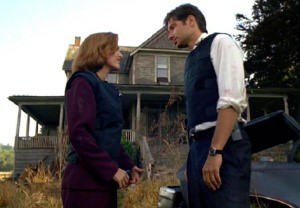
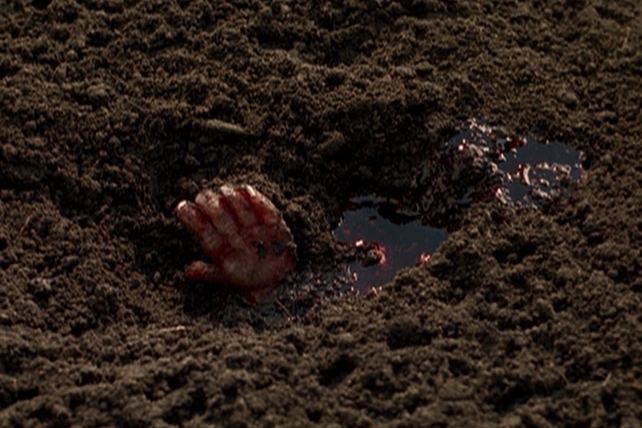
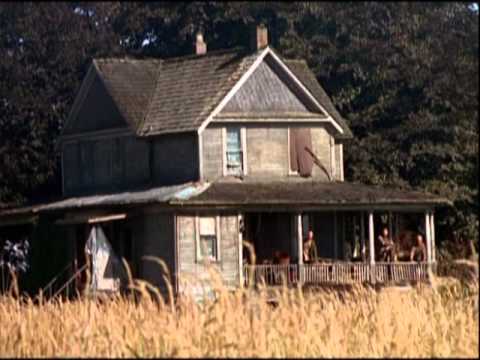
The episode sees Mulder & Scully looking into the death of an infant whose body was buried in the dirt in the remote town of Home, Pennsylvania. Their investigation leads them to encounter the Peacock family, three brothers seemingly living alone in an old house near where the baby was found. If you are somehow reading this but haven’t seen this episode, you should rectify that immediately. You won’t regret it.

'Home' was written by the great Glen Morgan & James Wong, who were returning to The X-Files following the cancellation of their series Space: Above & Beyond. It was the first in a quartet of very fine Season 4 episodes that all test the elasticity of the series in different ways. 'Home' is almost certainly the most violent and disturbing X-File ever made. I’d argue that 'Home' is the apotheosis of a certain type of Morgan & Wong script – scripts that embrace the possibilities The X-Files offers for thematically-rich, genuinely frightening horror (see also 'Squeeze'/'Tooms', 'Ice', 'Die Hand Die Verletzt').

The cleverness of Morgan & Wong’s writing usually becomes apparent with close analysis and this one is no exception. The title has several meanings. Home is the name of the town, a place that hasn’t fully moved with the times. It’s also an apt title for an episode that meditates on the way modernity encroached on a certain way of American life, represented (in an extreme way) by the lifestyle of the Peacock family, and the problems posed when not everybody accepts that change has been for the best. Finally, ‘home plate’ is the base that we first see in the kids’ ball game, where the baby’s body is discovered.

home2

The idea that things are not what they seem on the surface is baked into the script. What looks like a great place for kids to play baseball proves to be a bad choice when blood bubbles up from the soil. Mulder tells Scully that she doesn’t know him as well as she thinks she does when she jokes that he couldn’t live without his cell phone. Soon after, he is surprised when Scully talks about motherhood in a way he hadn’t heard her speak before. Mulder & Scully presume the Peacock house to be empty when they enter it, but Mrs Peacock was there unseen all along, under the bed. In the gripping final stages of the episode, the agents raid the Peacock house and have to contend with a range of booby-traps that aren’t immediately visible.

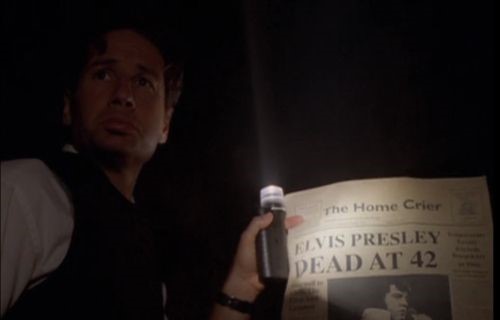
Wisely, Morgan & Wong leaven the grimness of the subject matter with a fair bit of humour. There are some really good quips from both Mulder & Scully (and an unlikely reference to Babe). I think the funniest moment, though, is actually dialogue-free. While in the Peacock house, Mulder finds a newspaper reporting the death of Elvis and Duchovny pulls a great face.

'Home' was directed by the late Kim Manners. Manners was the most prolific helmsman on the show and did all sorts of different episodes. I think that 'Home' exemplifies the skill Manners brought to The X-Files and it’s no surprise that he supposedly felt very proud of it.

home3

The sequence where the Peacock brothers leave their home before eventually murdering Sheriff Taylor and his wife showcases Manners at his best. He uses all the tools at his disposal to fashion a tour-de-force that is pure cinema. As the brothers drive to their destination Manners crosscuts back and forth between them, Sheriff Taylor & his wife at home, Scully asleep in bed & Mulder watching TV, thus building tension as we initially don’t know who the brothers are after.

The camerawork in this sequence is interesting. There are times when the camera travels quickly, such as when the Taylor's leave their front door unlocked and the camera moves in to emphasise the importance of this. At other times, Manners isn’t afraid to keep the camera static to create suspense. When the sheriff’s wife hides under the bed Manners shoots from her point-of-view, making us imagine the way she must be feeling.Throughout the scene, we hear the song 'Wonderful! Wonderful!' emanating from the Peacocks’ car stereo, a sweet song which becomes incredibly foreboding when used in this context. It fits thematically too, a pop song from an age now rapidly receding into the past.

After the Peacocks leave, there is a dissolve from the front of the Taylor house to a close-up of the trembling hand of the Sheriff’s Deputy, who has discovered the bodies. His involuntary physiological reaction is entirely understandable and I dare say it has been shared by a large number of people who’ve viewed 'Home' over the years. As a whole, the choices made by Manners here (and indeed in the episode as a whole) are very deliberate and undeniably effective.

home_peacock_house

Home is terrific from start to finish. In my view, it’s the best standalone episode of The X-Files, and it never ceases to appal and excite. Once seen, never forgotten.

--

You can follow Carl on Twitter @csweeney758